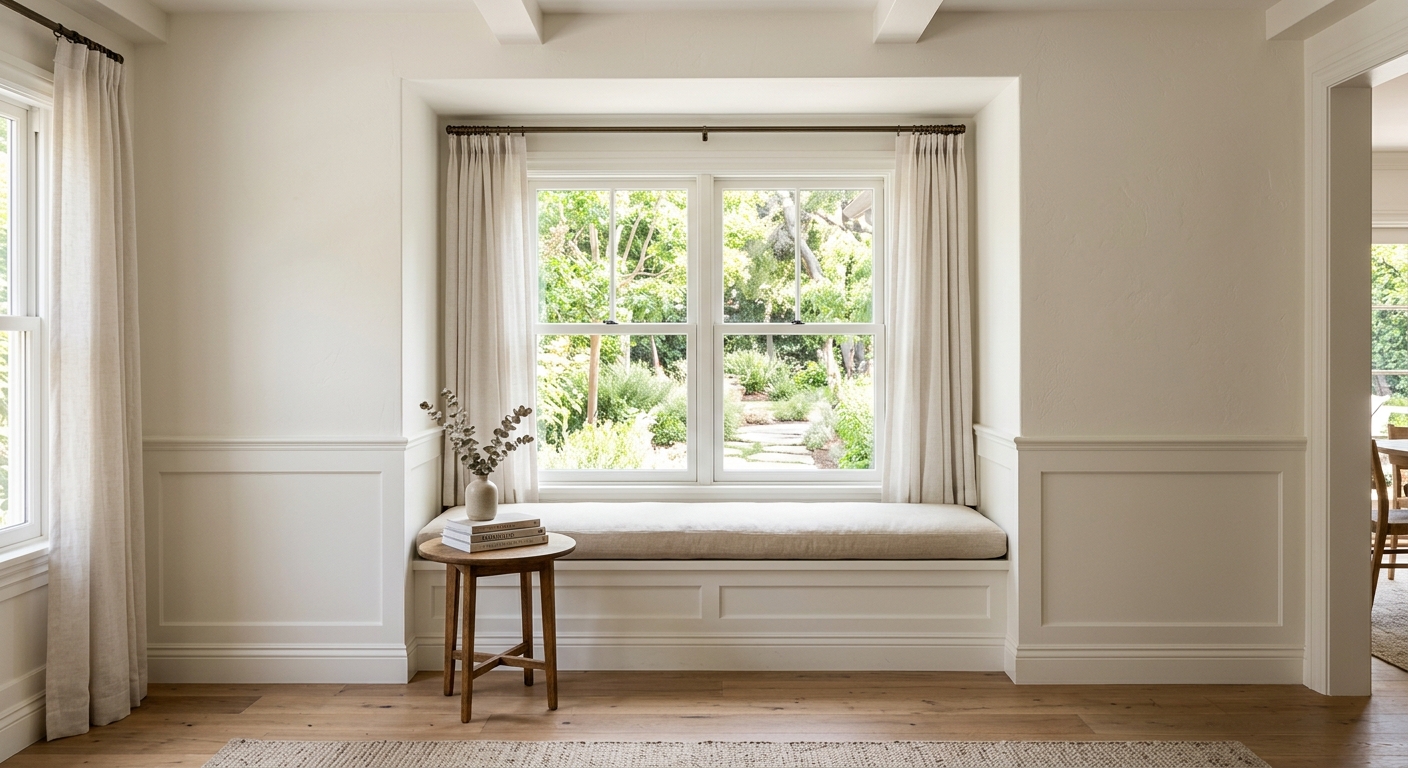
Virtual Staging for Loft Nooks: How to Make Small, Strange Spaces Pull Their Weight
There is a special category of room that causes buyers to squint, tilt their heads, and immediately decide they will “figure it out later.” Which, translated from buyer-language into reality, means they will not figure it out at all. They will simply move on to the next listing that makes sense in under three seconds. That room is usually the awkward bonus room: too open to feel private, too small for a media room, too odd for a proper bedroom, and just weird enough to sabotage otherwise good square footage.
This is exactly where AI virtual staging earns its keep. Not the fluffy, decorative kind. The useful kind. The kind that takes undefined space and gives it a job. When you stage an awkward room correctly, you are not adding furniture for the sake of visual noise. You are removing buyer uncertainty. And uncertainty, as any decent marketer or agent knows, is a silent deal killer.
At Staging Wizard, we approach these problem rooms like a Technology Director with a floor plan addiction and very little patience for vague listing copy. “Flex space” is not a strategy. It is a shrug in MLS form. A better strategy is to use AI virtual staging to present a credible, elegant answer to the question every buyer is already asking: What would I actually do with this room?
Why awkward bonus rooms underperform in listing photos
Vacant rooms do not look flexible. They look unfinished. Buyers are not design professionals, and most of them are not eager to become amateur spatial analysts on a Tuesday night while scrolling listings. If a room lacks obvious function, they usually assume one of three things: the layout is bad, the home is smaller than advertised, or they will need to spend money fixing a problem they do not fully understand yet. None of these reactions help your sale.
Photographically, empty bonus rooms are even worse. Strange wall angles flatten badly. Dead corners feel smaller on camera than they do in person. Windows can blow out the light and make the room feel cold. A random half-wall or sloped ceiling suddenly becomes the star of the image, and not in a charming architectural way. In a “who approved this?” way.
That is why smart virtual staging works best when it is not trying to impress everyone. It should clarify the room for the most likely buyer. A compact home office and reading lounge, a teen study zone, a yoga-and-wellness retreat, a nursery-adjacent parent workspace, or a clean guest overflow setup can all work. The trick is matching the concept to the home, neighborhood, price point, and architectural logic.
Start with buyer psychology, not furniture
Good staging is strategic storytelling. Great staging starts before the sofa, desk, or accent chair ever appears. In Vision Builder, the strongest results come from defining the room’s likely purpose, the target buyer, and the tone of the space before you touch aesthetics. If the home is an urban townhouse, the bonus room might need to perform as a hybrid office and creative nook. If it is a suburban family home, the same footprint may be better positioned as a homework hub with built-in calm. If it is a resort-style condo, maybe the win is a serene media lounge with occasional overnight flexibility.
In other words, stop asking, “What looks nice here?” and start asking, “What would make this room feel inevitable?” Buyers respond to rooms that seem solved. Once a space feels resolved, they mentally absorb it into the value of the home rather than cataloging it as a future project.
Function must be visible at a glance
The best staged bonus rooms communicate purpose instantly. A desk facing natural light, a slim shelving system, and a lounge chair says productive but livable. A daybed, side table, blackout drapery, and layered lighting says guest-ready without pretending this is a legal bedroom. A pair of floor cushions, sculptural lamp, and minimal storage can signal a meditation or wellness room without tipping into spa-themed nonsense.
That last part matters. Over-staging is the fastest way to turn a tricky room into an unbelievable one. If the architecture says “modest niche,” do not force “executive library” into it. The room will resent you, and the buyers will notice.

Use Vibe Staging to fix the emotional temperature
Awkward rooms often suffer less from layout than from mood. They feel dim, disconnected, or visually accidental. This is where Vibe Staging becomes more than a nice extra. Adjusting warmth, contrast, softness, and overall atmosphere can transform a room from leftover square footage into an intentional destination. A slightly warmer palette can make a loft nook feel inhabited. Cleaner daylight balance can make a narrow office alcove feel more expensive. Textural layering can prevent sharp architectural oddities from reading as defects.
Notice what none of that requires: major renovation. Buyers are not always shopping for perfection. They are shopping for confidence. If the imagery tells them the room has a clear emotional tone and a usable identity, they stop fighting it and start imagining themselves in it.
Magic Motion turns static clarity into spatial understanding
One image can define a room. Motion can defend it. This is where Magic Motion becomes especially useful for awkward layouts. A short cinematic sweep through the space helps buyers understand how the room connects to adjacent areas, where furniture actually sits, and why the design choices make sense from multiple angles. Static photos can sometimes look like staging cheats. Motion proves the concept holds up in real space.
For unconventional rooms, that extra layer of credibility matters. A buyer who might distrust a single hero image will often trust a subtle animated walkthrough that reveals depth, scale, and flow. It is not just prettier marketing. It is better evidence.
Small spaces need fewer ideas, better executed
When generating staging for bonus rooms, restraint wins. Choose fewer pieces with stronger purpose. Maintain circulation. Let the architecture breathe. Use contrast sparingly. If there is a view, honor it. If there is an odd ceiling line, work with it instead of hiding it under visual clutter. AI virtual staging is most persuasive when it feels edited rather than eager.
This is also where Staging Wizard’s faster workflow matters. You can test one concept as a compact office, another as a quiet retreat, and compare which version best matches the listing strategy. Instead of arguing in the abstract about what the room could be, you can see it. Quickly. With enough realism to make the decision useful.

The real goal: eliminate friction before the showing
By the time a buyer books a showing, you want the room’s purpose to feel mostly resolved in their mind. That does not mean they must use it exactly as staged. It means they should arrive believing the square footage is valuable. That is the job. The room is no longer “awkward.” It is now an office, a retreat, a lounge, a guest zone, or a flexible upgrade to daily life.
And that is what strong virtual staging really sells: not furniture, but certainty. In a crowded market, certainty is gold. So the next time a listing includes one of those suspicious little in-between rooms everyone politely calls “versatile,” skip the vague optimism. Give it a believable identity. Use Vision Builder to define the role, Vibe Staging to tune the emotion, and Magic Motion to prove the concept works in space. The weird room may not become the biggest room in the house, but with the right strategy, it can absolutely become the smartest.