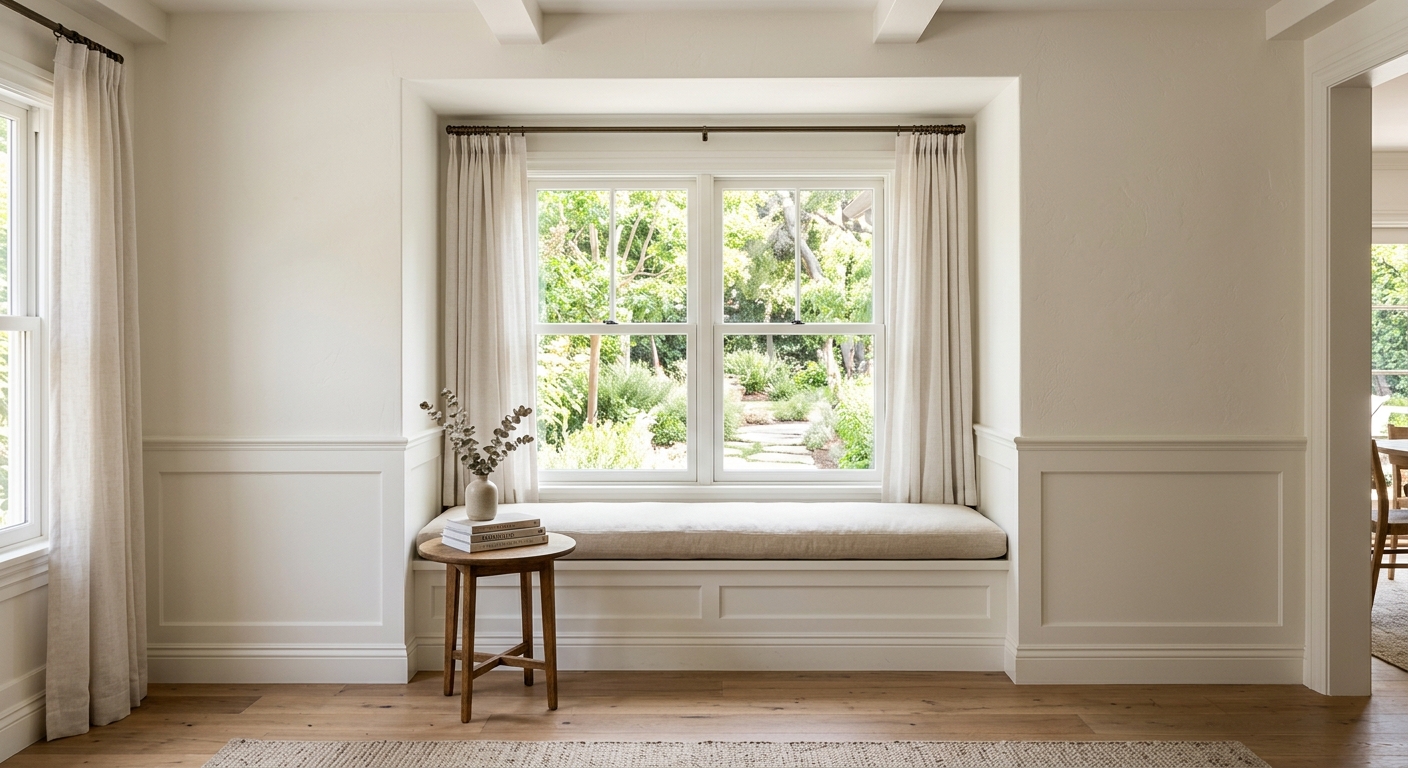
How to Stage a Stair Landing Niche So Buyers Stop Ignoring It
Every house has that one odd little area that clearly meant something to the architect and currently means absolutely nothing to everybody else. Enter the stair landing niche: the awkward recess, mini-loft edge, or in-between square footage that shows up in listing photos looking like it is waiting for instructions. Buyers see it, register it, and then mentally file it under weird. Which is rude, but not entirely unfair.
The problem is not the niche itself. The problem is ambiguity. In real estate photography, ambiguous spaces almost never get the benefit of the doubt. If a buyer cannot tell what a space is for within a second or two, the space starts feeling like wasted square footage. That is why this tiny zone matters more than people think. A stair landing niche can quietly support the story of the home, or it can sit there looking like a drywall shrug.
This is exactly the kind of room-adjacent puzzle AI virtual staging should be solving. With the right visual strategy, that overlooked pocket can become a reading nook, a compact work zone, a design moment, or a lifestyle cue that makes the floor plan feel smarter. And yes, this is where Vision Builder, Vibe Staging, and Magic Motion stop sounding like feature names and start behaving like useful tools.
Why stair landing niches confuse buyers in listing photos
Buyers are not walking through a listing with a tape measure and a graduate seminar in spatial reasoning. They are scrolling. Fast. They rely on visual shorthand to understand how a home lives. Kitchens read as kitchens. Bedrooms read as bedrooms. A stair landing niche reads as... maybe a chair goes there? Maybe a plant? Maybe shame?
When the use of a space is unclear, buyers tend to assume one of three things. First, that the home has inefficient layout decisions. Second, that the area is too small to matter. Third, that they will have to solve the problem themselves later. None of those thoughts improve engagement.
In listing photography, uncertainty acts like friction. Friction slows emotional momentum. And emotional momentum is the entire game. If a home feels easy to understand, buyers stay with it longer. If a home makes them do interpretive labor, they swipe onward to the next polished rectangle of granite and optimism.

What a stair landing niche should communicate
The goal is not to force a dramatic transformation onto six feet of architecture and call it visionary. The goal is to make the niche legible. A good staged niche tells the buyer three things immediately: this area has a purpose, the purpose fits the house, and the scale is believable.
1. Function without strain
If the niche is barely wide enough for a chair and a side table, do not stage it as a full executive office unless you enjoy looking unserious. Buyers can smell fake utility from a mile away. A better approach is to give the space a low-friction role: reading corner, laptop perch, sculptural console zone, or compact built-in moment. Small spaces succeed when they are specific.
2. Style continuity
One of the fastest ways to make an odd space feel intentional is to match it to the design language of the rest of the property. This is where Vision Builder pulls its weight. If the home leans coastal-modern, the niche should not suddenly become industrial bachelor cave theater. If the home feels warm transitional, the niche should echo those materials and tones. Consistency makes a weird space feel planned instead of accidental.
3. Emotional tone
Small architectural pockets work best when they feel calm and edited. Overstage them, and they start looking desperate. Understage them, and they disappear. Vibe Staging helps set the emotional temperature correctly. Warmer light, restrained materials, and a clear focal point can turn a dead zone into a visual breath between rooms. No fireworks required.
Best staging directions for a stair landing niche
Not every stair landing niche should become the same Pinterest clone with a boucle chair and a lonely throw blanket trying to save the day. The best direction depends on the layout, the likely buyer, and the property type.
Reading nook
This is the safest and often smartest option. A small accent chair, a slim side table, a floor lamp, and maybe a compact shelf create an immediate sense of purpose without overselling the square footage. Buyers understand it instantly. It says the home has moments, not just rooms.
Micro home office
If the landing has enough depth and decent light, a compact desk setup can be powerful, especially for remote-work buyers. But keep it believable. This is not headquarters. It is a focused perch for email, scheduling, and the occasional deeply dramatic spreadsheet. When staged well, it signals flexibility, which buyers love almost as much as pretending they enjoy open houses.
Design feature zone
Sometimes the niche should not pretend to be a “room” at all. A console, artwork, textured lighting, and intentional styling can frame it as an architectural asset rather than utility space. This works especially well in higher-end listings where atmosphere matters as much as function.

Where AI virtual staging outperforms guesswork
These in-between spaces are exactly where generic staging advice falls apart. Generic advice loves broad statements like “add warmth” or “create flow,” which is lovely if you are decorating a magazine spread and less helpful if you are marketing a specific listing with a weird landing cutout above the stairs.
AI virtual staging works better because it lets you test practical, audience-aware concepts quickly. With Vision Builder, you can align the niche with the target buyer and architectural style. With Vibe Staging, you can shape the mood so the niche feels integrated rather than tacked on. And with Magic Motion, you can go one step further by showing how the upper-level circulation moves past the niche, which helps buyers understand adjacency and flow instead of staring at a static photo wondering why the wall suddenly got philosophical.
That last part matters. Small spaces are often misunderstood in still photography because context collapses. A short cinematic pass can reveal how the niche connects to bedrooms, a loft area, or a hallway. That makes the home feel more coherent, and coherence sells better than confusion. Shocking, I know.
Common mistakes that make the niche look worse
The first mistake is overscaling the furniture. If the chair looks wedged in like it lost a parking dispute, the buyer notices. The second mistake is giving the space too many jobs. A desk, chair, bookshelf, bench, basket, lamp, and decorative ladder do not make the niche multifunctional. They make it look like a storage closet that got a branding consultant.
The third mistake is ignoring the niche completely in the visual plan. If it appears in photos but has no identity, it becomes a question mark in the middle of the listing story. And buyers are very good at mistaking question marks for flaws.
Why this tiny area matters in the larger listing narrative
Great listing presentation is not just about the big rooms. It is about removing every little moment of friction that causes buyers to hesitate. A stair landing niche may not be the hero image, but it can absolutely reinforce whether the home feels thoughtful, usable, and polished. Those impressions accumulate.
When a niche is staged with purpose, the whole floor plan feels more resolved. Buyers sense that the home offers flexibility, not leftover space. That is a subtle but meaningful shift in perception, and subtle shifts are often what separate “interesting listing” from “let’s book a showing.”
The takeaway
A stair landing niche is not dead square footage unless you market it like dead square footage. Give it a believable role, match it to the style of the home, and keep the execution disciplined. That is how a tiny awkward area starts contributing to buyer confidence instead of quietly draining it.
If your listing has one of these odd little architectural side quests, Staging Wizard can help you make it make sense. Use Vision Builder to define the function, Vibe Staging to set the tone, and Magic Motion to show how the space fits into the broader flow of the home. Because buyers should not need a map, a design degree, and blind faith to understand your listing photos.